
Illumination Part One
ohhhh now I understand

It’s been an intense few months in my world. Since February, 5NP in Oregon became a real live thing and WCA started offering trainings; the acupocalypse finally went public; ORCCA got swamped with applications for this year’s entering class… and I received a mental health diagnosis that’s more serious (and more stigmatized) than the one I thought I had.
Bet you weren’t expecting that one; me neither. Nonetheless it’s been illuminating.
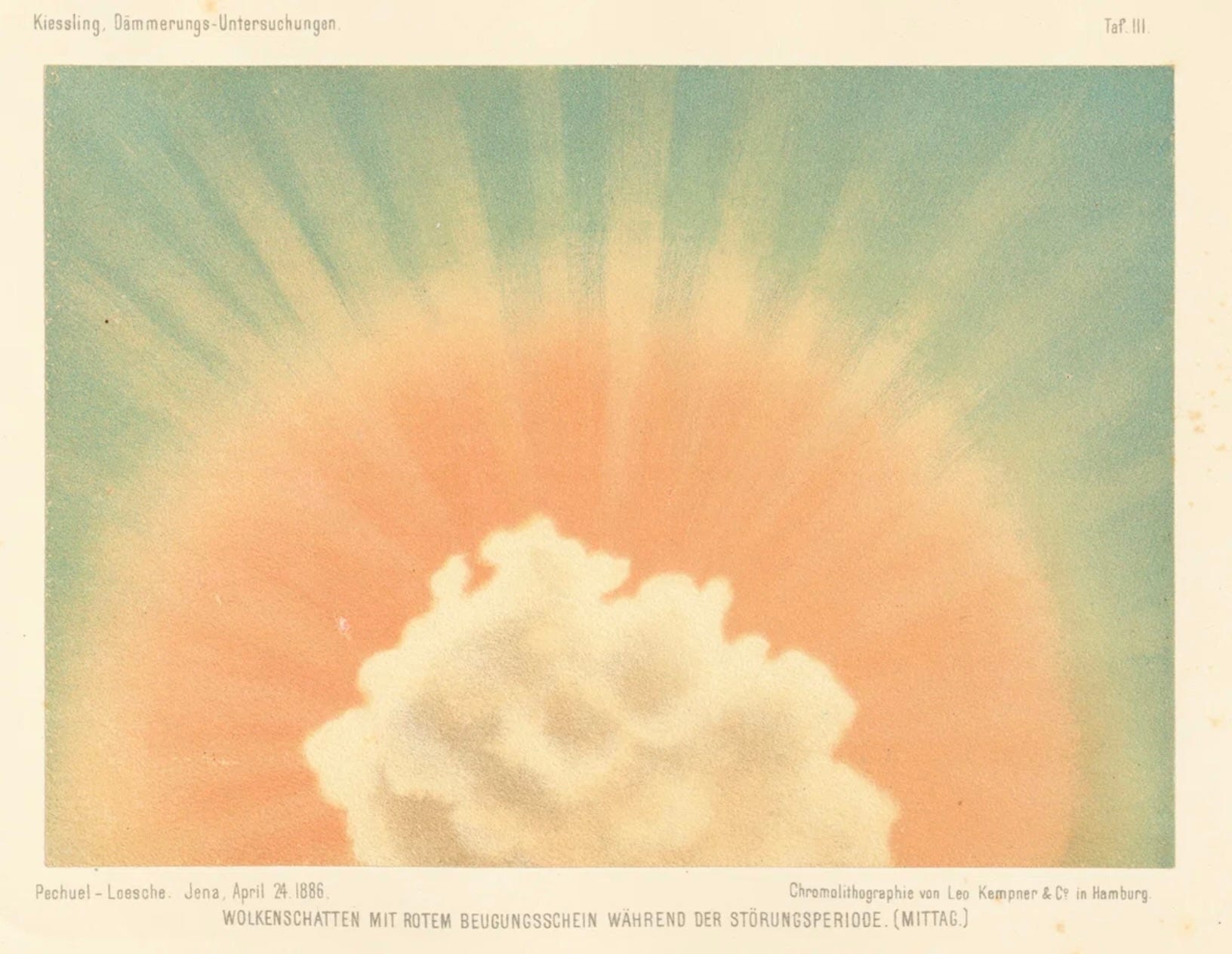
This diagnosis brings up all the metaphors for illumination: it felt like a lightning strike, just as shocking as it sounds; but also like dawn, where the light comes up slowly and things that were flat shadows gather substance and dimension. And it also felt like fumbling for a switch in a dark room, the room where I’m always banging my shins on the furniture and every so often, tripping and falling flat on my face. I finally found the light switch! And along with it the relief of being able to navigate —everything, really.
Let me back up. Content warning for mental health, diagnosis, trauma, suicidality.
I’ve been public for years about having PTSD, in part because it’s not always possible for me to hide it — it causes logistical problems often enough that it’s easier for me if people, especially people I work with, know about it. And obviously it impacts everything about how I approach acupuncture and trauma informed care.
Interacting with health care providers is often fraught for people with PTSD and I’m no exception. That goes double for therapists; I had a bad experience with a psychiatrist when I was a teenager and ever since, I’ve been trying not to need help in that department. A variety of factors converged over the last couple of years, though, that pushed me into seeking treatment, this time with a trauma therapist. Attempts to address my PTSD went off the rails almost immediately (as they have in the past) but this therapist asked better questions, which led to an evaluation with a specialist.
At the end of that process (which was long) I received a diagnosis for something called OSDD, which is a chronic complex dissociative disorder. Functionally it’s very similar to its sibling, Dissociative Identity Disorder (DID), which used to be called Multiple Personality Disorder. (Yeah, that’s been a lot to take in. And technically I still have PTSD too.) It’s a childhood onset disorder, which means I’ve had it my whole life and wow, does it explain a lot.
Including certain aspects of my relationship with the acupuncture profession, which I’ll get to in a minute.
First, though, some background on dissociative disorders (DDs). They’re misunderstood, under-diagnosed, and frequently misdiagnosed. Many people with DDs hide them, including from themselves. This is the best Pub Med article I’ve found and it’s titled “Dissociation debates: everything you know is wrong.” Just like PTSD, DDs are caused by trauma. There’s a spectrum of dissociation, where there’s normal dissociation (like spacing out while you’re driving on the highway and missing an exit, or getting lost in a good book) at one end, while PTSD is towards the middle, and the “severe psychopathologies” like DID (and OSDD) are towards the other end.
Some people with DDs are able to participate in the world and be very engaged (see this New York Times profile of psychiatrist and researcher Milissa Kaufman) but others aren’t so fortunate; they spend a lot of time in hospitals. One statistic I came across is that 70% of people with DID try to kill themselves, usually repeatedly. I only seriously tried once, as a teenager, but suicidal thoughts are pretty much a feature and not a bug for me. It’s a huge relief to have an explanation for that, because actually I have quite a nice life that I appreciate very much, so the persistence and intensity of my suicidality has been confusing.
There’s no medication for DDs, only long term psychotherapy. Treatment of DDs is phased, and “safety and stabilization” is the first phase — which can take a long time. Remission is possible but management is a more realistic goal; these are chronic conditions and often, they’re psychiatric disabilities.
When I first got the diagnosis, one of my friends said, “Don’t tell the internet.” “Yeah,” I said, “PTSD is pretty relatable, but this is...” “Less so,” she said. I’ve spent about four months weighing the pros and cons of disclosure. I landed on disclosing for a few reasons: one is that treatment for OSDD is tiring, the impact is real, there’s no end in sight, and so I’m going to have to make changes to my job. This newsletter is going to double as my template email “I’m sorry it took me so long to get back to you, I have a lot going on”. Another reason is that I hate stigma and I’ll de-stigmatize whatever I can.1 But the main reason is, while I’m not thrilled about giving the internet something to talk about, there are aspects of this that I really want to write about. I use this newsletter to think things out and if I can’t write about this, it’s going to be hard for me to write about anything.
Also, my least favorite part of the acupocalypse (so far) is having to defend the community acupuncture model and our school, ORCCA. Recently I learned that a leader who’s prominent in the AHM Coalition said publicly that he has “a personal vendetta” against ORCCA and he hopes our school closes. This person also once said to me directly that he thought our school had more than our share of students with mental illnesses. Since that’s the professional environment we’re in, I’d rather have this conversation on my own terms than possibly be outed for my stigmatized psychiatric diagnosis.
As I was reading about the pros and cons of disclosure, I kept finding myself on websites about the ADA (Americans with Disabilities Act, for those who aren’t in the US; it protects people with disabilities, including mental illness, from discrimination). As a result I realized something else illuminating:
The intention behind the community acupuncture model is inclusion. You can look at the model from a variety of angles, related to how we include people: economically, by offering low-cost and/or sliding scale treatments; socially, by making it easier for people to get acupuncture with family and friends; logistically, by making it easier to access appointments by having more of them per hour — the list goes on. From my current vantage point, though, the model looks a lot like a disability accommodation that has allowed me to receive, provide, and teach acupuncture — where otherwise, with the conventional model, I couldn’t have consistently done any of those things.
Before I go any further with this theme, some caveats. No accommodation necessarily works for everybody, or every disability, including community acupuncture. I’m not saying everybody with trauma, or a DD, will find it helpful. I’m only talking about what makes the community acupuncture model work for me — but according to the ADA, that’s actually a valid perspective! Especially in the current debates about acupuncture education, community acupuncture gets defined as something lesser, but for me it’s something safer.
For as long as I’ve been an acupuncturist, the profession has been obsessed with defining acupuncture as “a comprehensive medicine” as opposed to “just sticking needles in people”. There’s an idealized vision of an acupuncturist as a scholar-physician whose deep study of Chinese medicine allows them to address almost any complaint that a patient shows up with — at the most profound level. Not only do they perform functional assessments and interpret lab tests and diagnostic imaging, they can address patients’ emotional, mental and spiritual blocks and guide them through “shadow work”. Maybe even “transform” them.
That’s a lot of pressure for both acupuncturists and patients. What I’ve wanted to say for a long time but never had the language for, until now, is: I think that focus on being comprehensive is risky and invasive. It’s certainly unsafe for patients like me. Many of the ways that acupuncturists try to be “comprehensive” can be actively destabilizing for someone with trauma or other mental health conditions. And the consequences aren’t trivial; “shadow work” or other attempted mental/emotional/spiritual transformations could put someone in the hospital.
You just don’t know what someone might be dealing with when they walk into your clinic. Like me — I’m a cautionary tale about how people might not even know themselves. Deep study of Chinese medicine does not necessarily prepare you to safely work with real people with complex psychological conditions.2
Looking at the acupuncture profession from my new vantage point, deep in the DSM-V (that’s the Diagnostic and Statistical Manual of Mental Illnesses, fifth edition, dissociative disorders have their very own chapter), I can see why it was so important to me to figure out a way for patients to get acupuncture on their own terms. The conventional structure itself — the requirement of navigating an intensive relationship with a scholar-physician whose goal is transforming their patients, just to get access to acupuncture, can be an impassible barrier.
I’m not saying that the conventional model for acupuncture is wrong — I’m saying that if it’s the only model, some of us with disabilities are not going to be able to get any acupuncture, regardless of whether we can afford private room rates. The “comprehensive” part is asking too much, when just getting through the day is hard enough.
This perspective also clarifies some things about our school.
The intention behind the community acupuncture model is inclusion. If you’re going to try to include a wide diversity of patients, if you want to open your doors to as many people as possible, you need to think about safety in a whole different way than most conventional acupuncturists do. Yes, you need all the basics like hygiene, universal precautions for bloodborne pathogens, and safe needling depths. But you also have to take into account social safety and trauma informed care. And you need humility about your own limits.
Transparency and good boundaries make acupuncture practice safer. At ORCCA we want to train acupuncturists who feel confident about practicing with a diversity of patients within clear limits, as opposed to cultivating the overconfidence that their study of Chinese medicine prepares them to be an authority on all aspects of their patients’ health. And we want to give students the opportunity to safely treat enough patients so that they graduate with the muscle memory of how to do it. In our world, “enough” looks like graduates having 500 to 900 treatments under their belts before they go out in the world unsupervised.
We also want to give students the muscle memory of practicing within a small business context — because we think that makes them safer practitioners too. We don’t want them to be surprised by demands like doing the laundry and scheduling appointments on top of the demands of interacting with a lot of humans. Our students have three years to gradually acquire all the skills to practice in a way that’s safe, simple, grounded, and inclusive — as opposed to “comprehensive”.
I’ve heard acupuncturists say that they graduated from school with lots of classroom hours and an abundance of academic knowledge, but not much time with real patients. I think that makes the potential for overconfidence about their transformative powers even more concerning. Maybe it’s fine if your future patient base doesn’t include anybody with psychiatric disabilities, but that’s not the world I live in.
For me there are a lot of upsides to this diagnosis, and a big one is that it changes the tone of certain conversations with acupuncturists, even if it’s only in my head. If you think of the community acupuncture model and our school as disability accommodations, it’s no longer on me to argue or plead with the acupuncture profession to allow us to exist. It’s on the profession to prove that we shouldn’t, and that’ll be an ugly argument to make.3
But if it happens, I’m ready. I’ve got all this new light to work with.
My first job out of college, in a grassroots HIV nonprofit, made me really hate stigma. There’s nothing quite like watching people lose their jobs and their housing and their families because of a virus. Then I worked in detox settings and saw how badly drug users are treated by society, then in community acupuncture where I saw how badly people with chronic pain are treated, often by healthcare providers themselves…basically, stigma does not make me want to cooperate with it, it makes me want to do the opposite.
A paid subscriber asked a question about acupuncturists as gurus that I’ve been trying to address — now I think I can finally write about that. Also a question from another subscriber about what WCA is to me. Thanks for asking such good questions.
Comments for this post are off, apologies to paid subscribers. I don’t want to open the door to that particular argument in the comment section of this particular post.