
5NP One Year Later
on capacity-building

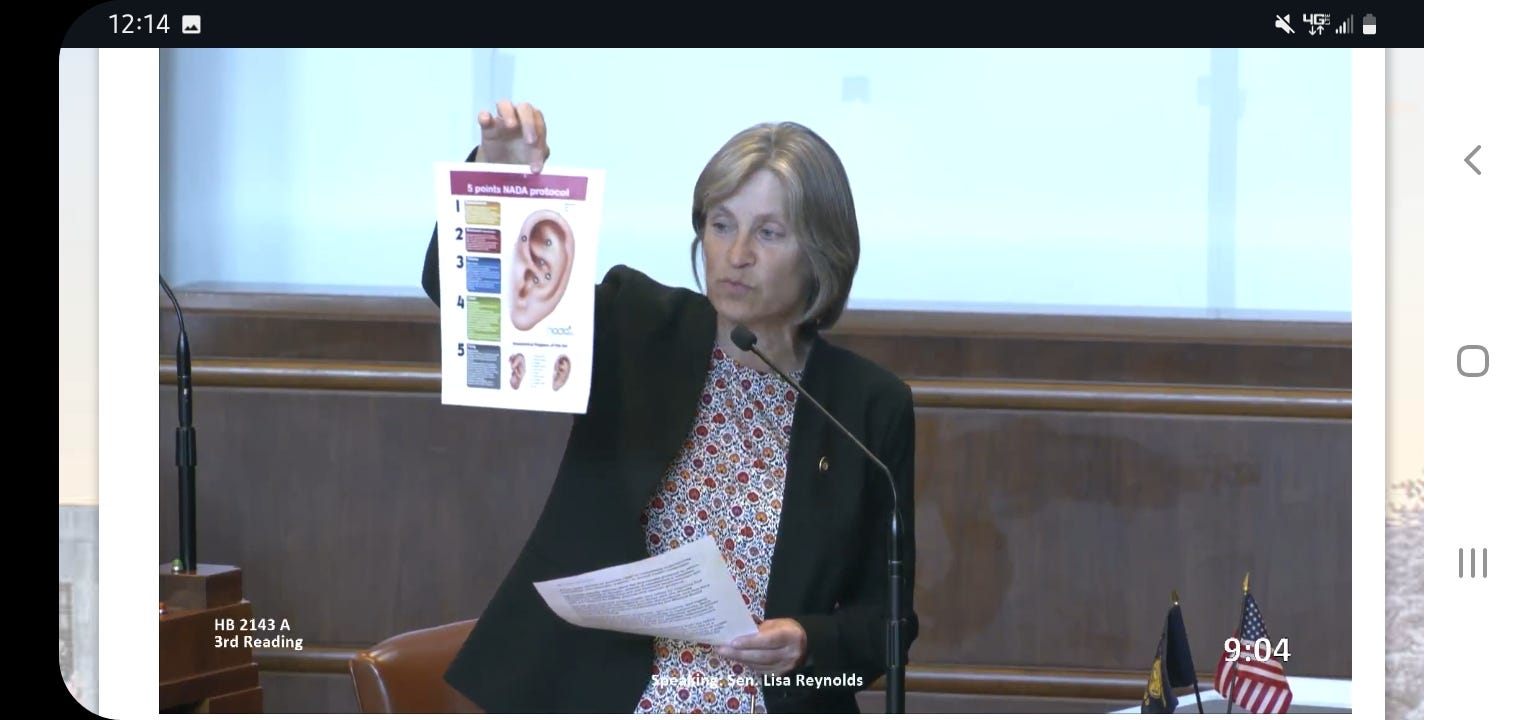
Almost exactly a year ago, our 5NP bill passed the Oregon legislature.1
This time last year, every weekday looked the same for me: wake up early and try to get work done before 10 am, which is when the Senate session started. At that point I’d be glued to the Oregon Legislature’s livestream for a couple of hours (along with other 5NP comrades) to see if our bill would get voted on. Every day was a nail-biter — would they get to our bill before they recessed? From May 20th to June 2nd, the answer kept being: nope, not today! One day we were almost there but then an argument erupted about ham radios that took up half an hour and so they ran out of time; it was maddening.
Before last year, I had no idea that bills sometimes fail because there are too many of them in a session and the legislators simply can’t get to them all. It wouldn’t have occurred to me that 5NP could be derailed by ham radios. There were a lot of things I didn’t know about all the hidden moving parts of legislation and regulation! In hindsight I’m glad; I would’ve worried more if I’d known how much there was to worry about.
Once the law miraculously made it through the queue and passed, it went to the governor’s desk and she signed it a week later. Then the legislative part was over and we moved into the rule making process — which is where I discovered what a huge task we’d dropped on the Oregon Medical Board: to set up all the infrastructure for a whole new class of providers by March 2, 2026. Hello again, hidden moving parts! I’ve had a license in Oregon since 1994 but I never had any idea of the amount of work that went on behind the scenes, to make that possible.
And once 5NP in Oregon was legal, the size of the task we’d set for ourselves started to dawn on me. Sometime in early March, I said to Sara Biegelsen, who’s managing WCA’s 5NP operations, “I feel like WCA is like a python that swallowed an elephant — now we have this huge thing to digest.”
Sara said, “Yes, except this elephant is wearing a tutu and roller skates, and skating back and forth inside the python.”
“While juggling swords,” I added.
“Flaming swords,” Sara said.
Roller skates, tutu and flaming swords notwithstanding, in the last three months, WCA has trained 60 5NP Techs. Letty Dogheart has trained 8 more, and 2 of Letty’s trainees will be opening regular clinics starting on the Solstice! Check out their beautiful flier:

And as of today there are 35 registered 5NP Technicians on the Oregon Medical Board’s website. (Because it takes people a little while to work their way through the registration process.) All of this was unimaginable a year ago.
Back when Camille Trummer, our social impact consultant, was coaching us on creating organizational partnerships, she repeatedly reminded us that we also needed to build organizational capacity — because every successful partnership would require serious back of house labor. The message was: you can’t attract or sustain what you don’t have room for. Nothing big and new can happen without a reservoir of capacity.
All the hidden moving parts need space to rest in; otherwise you’re just creating chaos.
The coaching process itself built some of that capacity for us. I’m a fan of coaching as a container for change. (Acupuncture is also a container for change.) See:
Still, we’ve been on a continuous learning curve about capacity this past year. Big new things really do take up big internal space. All of WCA’s systems are adapting to the hidden moving parts of our 5NP work.
5NP has reminded us many times that a component of capacity is: be organized. Very organized. Wait, hold on, you’ve got to be even more organized than that! It turns out that putting on trainings every month2 requires an immense amount of back of house labor. Sara’s able to sustain it only because she’s so organized.
A less obvious component of capacity is fun. Meaning, it’s easy to do a ton of work with people who are fun to work with. And on a certain level the work itself has to be fun, or we can’t do it at all. Our world runs on intrinsic motivation.
After last week’s post, when I wrote:
There’s something I notice that other acupuncturists often misunderstand about us: We’re not driven by an abstract idea, or ideal, about how acupuncture SHOULD be practiced. Community acupuncture isn’t about obligation or martyrdom — we like it. This is what we want.
I heard from a few people who were surprised by that statement. They were too polite to say, “but people in the acupuncture profession assume that you’re miserable because you’re choosing to work with poor people, are you saying that’s not true?” but that was the implication. So I thought it might be helpful to reiterate: there’s no way we could do this amount of work if we didn’t enjoy it.
This really is our idea of a good time.
More than anything, a year of 5NP has taught us: whenever possible, be delighted; and when working with other people, be delightful. Because delight in any direction builds capacity.
Here’s the link to the video, which includes an excellent and entertaining introduction by Sen. Lisa Reynolds of the Health Care Committee (“The Five Needle Protocol — I think it was Senator Broadman who said, that sounds like a new Netflix series.”) Our part starts at 1:27:38.
WCA’s 5NP June training is full but there are still some spaces in the July training if you want to get on the waitlist.
On this day, Acupuncturists on Facebook had a complete meltdown. Should i remind them?
“Community acupuncture isn’t about obligation or martyrdom — we like it. This is what we want.” I sold my private practice to start a more community focused model and have not looked back, unless it’s to say, wow, I’m so much happier now.